A Smart Kid With Promise
Then at some point "promise" turns into your life.
-
March 4th, 1945 version A. I am born, oldest of three children, to Lutheran parents with roots (parents, aunts, uncles) living in Racine, Wisconsin. Just about as soon as I can walk, I started hanging with my cousin, Rye Gewalt. (We called it "hanging out" but the idiom has contracted over time) Rye is two and a half years older than me and lives two and a half blocks away. My mother's folks live three blocks further west. I live four blocks from Lake Michigan in the other direction. We're all strung out on a pretty short line, which makes for a pretty rich family life. I've only come to appreciate this because my children are all so far away.
-
March 4th, 1945 version B. I am born to a young woman from a Milwaukee suburb high school named Elaine. My father, as the story has come down, is headed overseas. War, remember? Should they marry? Will he be killed? In the end, Elaine puts me up for adoption. Until recently I had a little resentment that Elaine gave me up, but I didn't account for the times and the influence of Elaine's parents. Good girls didn't keep babies born out of wedlock in 1945. The parties married or the girl sort of disappeared until there was no longer any trace of the pregnancy and the corresponding stain on the family. I think my father and Elaine were high-school sweethearts. They both came from decent middle-class families. One of my grandfathers may have owned a chain of hardware stores in Milwaukee. I had an aunt who went to Northwestern. My mother played the church organ. How much of this is misremembered fantasy passed on from my adoptive mother June I don't know. I passed up the opportunity to look at my un-redacted adoption files out of respect for June, to whom I owe everything but life itself. (When I refer to "mother" or "father" here, unless it is obvious I am speaking about Elaine and her boyfriend, I mean my adoptive parents.) Elaine's first name was not quite fully blacked out on what papers I have, so I know that much for sure. The information on the adoption interview papers I have comes from a caseworker interview with Elaine and her mother, so I have only their view of my father. I don't know how much he participated in the process. He probably had to sign something, but I don't even have the redacted copy. My birth certificate is a legal fiction, listing my adoptive parents as my actual birth parents.
-
So what happened, really, in the personally tumultuous circumstances leading to my birth? What genetic predispositions for what diseases may I have? How many people out there bear a strong familial resemblance to me? Don't know, probably never will.
-
My adoptive parents had tried for some years, unsuccessfully, to have a child. My mother, June, was in her late twenties, my father a few years older. I was adopted at the age of three months, which I've been told was a little young for 1945. I was not thriving as an infant and whoever was deciding things figured the faster I got to a permanent home the better. It was the right decision. I was June and Irving's first child and they adored me. I got an incredible amount of attention from my mother, who was a "housewife" according to the custom of the day. It worked. I was a very cute, well dressed, well behaved little kid. When I was five my parents adopted my sister, Lynn. When I was nearly out of grade school nature played one of her pre-menopausal tricks and my mother got pregnant and produced my little brother, John.
-
Fascinated with machinery. I remember sitting on the sidewalk as a really little kid, maybe three or four, taking apart wind-up alarm clocks that were frozen up and put them together again, working. Tricky, getting all those spindles to go into their bearing holes at almost the same time. Not forcing anything. Not making things worse by bending something. Having patience to do the job right. Having persistence to do it over again until I had it working. Keeping track of all the little parts and re-assembling things because I got their internal logic, not because I had a drawing of how they all fit together.
-
The Fifties. Rye and I build stuff. We built forts from scrap lumber and underground hideouts. We spent a lot of time at the beach. We paddled around on tractor inner-tubes. We built rafts. We motorize Rye's wagon. We couple a starter motor to a pulley we bolt to the rear wheel. I sit in back and make contact with the battery. Accelerate and coast. Rye is up front steering. The rewards of being the older child. The battery holds about a mile's worth of charge. Later, we shift to a lawnmower engine and then we have some real range. We build model boats and airplanes with Jetex rockets and little .049 gas engines. Almost everything Rye learned, I learned by working with him. It gave me a couple of years head start on most of my contemporaries. Rye is functionally my older brother. I am the eldest in my immediate family, but I also get lessons in manipulating my more powerful cousin into adopting my ideas.
-
Vacuum tubes. Mostly we do electronic stuff. We make crystal sets. We build radio transmitters with three-tube Allied 10-in-1 kits. We can barely transmit three blocks. There's a picture around somewhere of me about five years old with my headphones on. We modulate Rye's flashlight and talk over a light beam. Transistors are invented. Rye still has the CK-722 with the broken lead we had to workaround with the crystal set cat whisker. Lots of WW2 surplus electronics around very cheap. Rye becomes a Ham radio operator. I study Morse code a few times but never get my license. I'd rather listen to short-wave broadcasts on my super-regenerative receiver than collect QSL cards. Radio Moscow and the BBC are my big things, along with electric trains. I have a 6' X 10' train table and I'm constantly adding switches and miniature streetlights. Rye's father builds a fallout shelter. We string antennas at our houses. We climb the beacon tower at the local airport on Amateur Field Day and set up antennas. We pack a surplus army transceiver into the woods. I crank the little two-handled generator which is chained to a tree. Rye keys out code. The generator kicks back every time the key goes down. Again, the youngest get to crank the generator.
-
The "older brother" drifts away. Rye and I don't see as much of each
 other when he starts high school. I build more stuff
with either relay logic or vacuum tubes. I rebuilt a half-rotted
duck boat. It was a beamy flat-bottomed thing with a deck and
cockpit. I paddled way out into lake Michigan. Never heard
of a PFD. Its a wonder I
didn't drown.
other when he starts high school. I build more stuff
with either relay logic or vacuum tubes. I rebuilt a half-rotted
duck boat. It was a beamy flat-bottomed thing with a deck and
cockpit. I paddled way out into lake Michigan. Never heard
of a PFD. Its a wonder I
didn't drown.
-
The vending machine. I build a vending machine for Tootsie Rolls in grade school. Put in a penny, it shorts contacts that operate a solenoid and a shuttle that pulls the bottom stick of candy from the magazine and it rolls out the chute. The machine stops working when the size if the candy is reduced by the manufacturer. Progress.
-
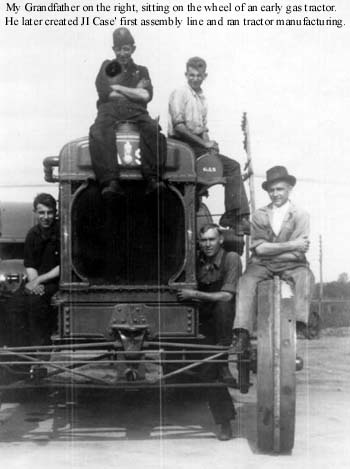
My Maternal Grandfather. My mother's father, Charlie Stege, retired around 1950. He had been in charge of the factory floor at the J. I. Case Tractor Works. One of the early things he did at Case was to supervise the construction of their first moving assembly line for tractor engines. I spent a lot of time with him when I was a kid, puttering in the garage, always working on his balky 2 cycle lawnmower. He taught me a lot about the logic of stuff, why engines run and how to diagnose the fault when they won't run. He taught me how to get the retaining nut off a flywheel before the invention of impact wrenches. (hint: the procedure involved a hammer.) I inherited a lot of his hand tools, some of which I still use. Like my father, he was a leader and an absolutely straight-up guy. In the photo at the right, Charlie is the guy in the hat sitting astride a wheel on an early J. I. Case gas tractor. So, to questions about my heroes, my adult models and all that, they were the adults around me when I was a child. By and large they were functioning, successful people and good parents. A few exceptions, the alcoholic uncle and so forth, but I did not appreciate the lessons of their lives until much later.
-
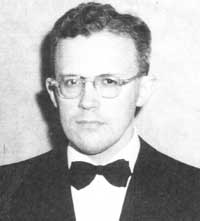
My Dad. By the time I got to know my father, Irving, he had settled into his life's pattern, his story arc. He worked hard as the production manager at J. I. Case. My mother was briefly his secretary. He had wanted to study for the
 ministry, but the
depression intervened and he had to go to work, not to college.
There was a whiff of a flirtation with another woman at the office
very early in their marriage, but my mother put a hard stop to it (got
the woman fired) and I don't think my father drifted out of line after
that. If he did, he covered his tracks completely, so effectively
it never happened. Of course, this is my mother's view of the
situation. He would never have talked about it. My dad was a wonderful tenor and soloed with
the company chorus and later in the church choir. He was
meticulous in his work, so much so that it got in the way of his
building projects around the house. The basement cabinets went
unfinished for years, but every board was cut and fitted
perfectly. In the middle part of his career he overworked, like
most of us. He would take a nap on the couch and then do a few
hours of homework at the kitchen table after we went to bed. We
didn't talk very much, but we ate dinner as a family together every
night. It was the wonderful fifties, we just didn't appreciate
it as kids. He was the church treasurer for years, later the chairman
of the congregation. His integrity was beyond question. He
always supported me in my little projects, helping me buy key parts at
the hardware store. He bought a roll of sheet lead for my x ray
machine. He had the main housing for the x-ray tube welded up
from my sketches. My Dad retired after 40 some odd years with
the same company. Those were the days. He retired with a
full pension and health insurance. It saw both of my parents
through to the end of their lives and left each of us kids a little
something. I figure I'll be very lucky to break even.
ministry, but the
depression intervened and he had to go to work, not to college.
There was a whiff of a flirtation with another woman at the office
very early in their marriage, but my mother put a hard stop to it (got
the woman fired) and I don't think my father drifted out of line after
that. If he did, he covered his tracks completely, so effectively
it never happened. Of course, this is my mother's view of the
situation. He would never have talked about it. My dad was a wonderful tenor and soloed with
the company chorus and later in the church choir. He was
meticulous in his work, so much so that it got in the way of his
building projects around the house. The basement cabinets went
unfinished for years, but every board was cut and fitted
perfectly. In the middle part of his career he overworked, like
most of us. He would take a nap on the couch and then do a few
hours of homework at the kitchen table after we went to bed. We
didn't talk very much, but we ate dinner as a family together every
night. It was the wonderful fifties, we just didn't appreciate
it as kids. He was the church treasurer for years, later the chairman
of the congregation. His integrity was beyond question. He
always supported me in my little projects, helping me buy key parts at
the hardware store. He bought a roll of sheet lead for my x ray
machine. He had the main housing for the x-ray tube welded up
from my sketches. My Dad retired after 40 some odd years with
the same company. Those were the days. He retired with a
full pension and health insurance. It saw both of my parents
through to the end of their lives and left each of us kids a little
something. I figure I'll be very lucky to break even.
-
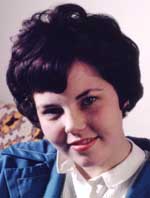 I
was a science geek in high school. Some of the cool girls
thought I was funny, but I dated very little until my senior
year. Then I met a girl from another high school at a football
game. At least that's how I remember it. Carol was my
first steady girlfriend, my first real love. I didn't know that
high school romance falls apart when you go away to college. So
this was my first real broken heart too.
I
was a science geek in high school. Some of the cool girls
thought I was funny, but I dated very little until my senior
year. Then I met a girl from another high school at a football
game. At least that's how I remember it. Carol was my
first steady girlfriend, my first real love. I didn't know that
high school romance falls apart when you go away to college. So
this was my first real broken heart too.
-
This leads to a story about my father. One Sunday morning when I was nearly 18, as we were getting ready to go to church, my dad got the car out of the garage and warmed it up. I had been out on a date the night before with Carol. When I came out of the house, he handed me the stocking clip from a woman's girdle. (Panty hose had not been invented yet) My dad just said "you forgot this" or something equally cool. And that was the end of it. I had no idea my father was capable of something that gracious and restrained. Actually, I think he knew that if he made a big deal out of it my mother would have been terribly upset. So he was really sparing her that little glimpse of teenage reality as much as he was being patient with me. My dad knew I was terrified and humiliated. And he knew when to stop talking.
-
My parents built a new house on the edge of town during the war and lived in it for over fifty years. When he was in his twenties he played league baseball, a catcher. I guess all the years of his having the radio tuned to play-by-play turned me off to baseball. Not that I was any good at it. I was a tall, skinny kid with a birth defect that left me minus the pectoralis muscles that bring my right arm forward supplying the power to throw a baseball. My body compensated, bending bones and overdeveloping other muscles to take over the job, but I was never coordinated or powerful enough as a kid to throw a ball very far or very accurately. My parents were perfectly happy I wasn't crippled. I ran track in high school, but I was more of a geek, certainly not a jock.
-
Integrity. The best complement I can pay my father is that he taught me by example to be a really good father to my own adopted family. I absorbed the skills from his modeling them and didn't even know it. I also absorbed his integrity. I'm not a candidate for sainthood. Integrity is highly effective but it can be a little situational. You maintain integrity as a daily choice because it allows people to trust you. I know my father's integrity was rooted in his Christian faith, unlike mine, which is rooted in my character. I've bent the truth or distorted reality during my career when I had to, but as I've aged I have just chosen to play it pretty straight. It's how I was raised and it's so much easier on the memory. Sometimes I think if I had been more cold-blooded, selectively duplicitous and ruthless during my career I would have gone further. It's just speculation at this point. I've never believed in stepping over bodies to get ahead. I probably get that from my father too.
-
-
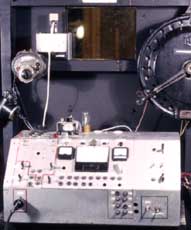
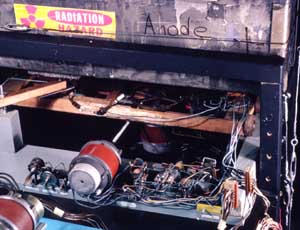
Learning I have to choose what my life is going to be about, but not liking it. I want to do everything. I'm frustrated I only get to live one life. When I get to high school in 1959, I run the science club, the camera club, the AV club, whatever. I try to lead so many things my teachers and parents have to reign me in. You cannot do everything.
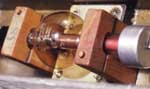 You must choose. I build x-ray machines for the science
fair, all four years. Every year it's more complicated.
Sixty thousand volts "open overhead", running on bare wires
suspended by parachute cord. I learn to be very careful and pay
attention to where my body parts are in space. (This is a very
helpful skill working on live machinery on boats.) I
build a machine to scan a sample through an x-ray pinhole beam and
expose similarly moving film with a neon lamp flashing to the clicks
of a Geiger counter. The sample and film scanners are coupled
with selsyn motors. It wins me an engineering scholarship at the
regional science fair which I pass up as I don't think I want to be an
engineer :)
You must choose. I build x-ray machines for the science
fair, all four years. Every year it's more complicated.
Sixty thousand volts "open overhead", running on bare wires
suspended by parachute cord. I learn to be very careful and pay
attention to where my body parts are in space. (This is a very
helpful skill working on live machinery on boats.) I
build a machine to scan a sample through an x-ray pinhole beam and
expose similarly moving film with a neon lamp flashing to the clicks
of a Geiger counter. The sample and film scanners are coupled
with selsyn motors. It wins me an engineering scholarship at the
regional science fair which I pass up as I don't think I want to be an
engineer :)
-
Academia. I went off to college in 1963, but not to become an engineer. I hated math, probably the result of a poor elementary school background. Or maybe it was the touch of ADD I seem to have. At Valparaiso University I majored in chemistry, biology, the student newspaper, the civil rights movement, political science and history, all in turn. Everything was interesting and I didn't stick to anything. Problem with choices, remember? I did manage to absorb quite a bit of chemistry, biology, history and English which has stuck with me for an awfully long time. Then I spent what would have been my junior year (1965-66) in Washington D.C., working for the Collegiate Press Service. Error. Flashing lights. Error. But I couldn't see it at the ripe old age of 20. Big responsibility, insufficient maturity, training and experience. Someone else's poor hiring decision actually, but I got to live out the consequences.
-
 The
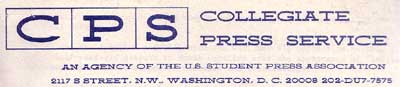
Collegiate Press Service. The Editor of the Collegiate Press
Service (me and another small-college journalist [Marilyn?] sharing
the job) was responsible for writing or editing five single-spaced
pages of copy mailed out to subscribing college newspapers twice a
week. I gathered material from our subscribers and developed
original stories doing phone interviews and cultivating stringers as
newsworthy situations developed on campuses around the country.
We particularly focused on press and academic freedom issues. I
has a congressional press pass and was expected to originate material
from the seat of all power and real significance,
DC. I was over my head and out of my league. I came from a biweekly
paper in Valparaiso, Indiana, not The Michigan Daily, and I couldn't
write very quickly. In this world there was no time to agonize
over the fourth draft of a story. My co-editor didn't do much
The
Collegiate Press Service. The Editor of the Collegiate Press
Service (me and another small-college journalist [Marilyn?] sharing
the job) was responsible for writing or editing five single-spaced
pages of copy mailed out to subscribing college newspapers twice a
week. I gathered material from our subscribers and developed
original stories doing phone interviews and cultivating stringers as
newsworthy situations developed on campuses around the country.
We particularly focused on press and academic freedom issues. I
has a congressional press pass and was expected to originate material
from the seat of all power and real significance,
DC. I was over my head and out of my league. I came from a biweekly
paper in Valparaiso, Indiana, not The Michigan Daily, and I couldn't
write very quickly. In this world there was no time to agonize
over the fourth draft of a story. My co-editor didn't do much  better, bless her heart. Washington DC is a company town and
virtually all the people there take working for, reporting on or
trying to influence the federal government VERY seriously. I had
trouble with that. I saw the Federal government as something
that ran the post office and drafted people like me to sweat and die
in Vietnam. Congress went on witch hunts for UN-American
Activities and Pinko Commie sympathizer campus radicals. All
this self-importance did not seem immediately relevant to life in the
provinces as I'd lived
it. So, unfit by training, attitude, sophistication and experience I
failed at the job pretty quickly. Thankfully, there was a job
with the organization I could do. I went to the basement and ran
the offset presses and paper handling machinery that printed and
distributed the material, now edited by Michael Gross, my boss,
formerly of the Michigan Daily.
better, bless her heart. Washington DC is a company town and
virtually all the people there take working for, reporting on or
trying to influence the federal government VERY seriously. I had
trouble with that. I saw the Federal government as something
that ran the post office and drafted people like me to sweat and die
in Vietnam. Congress went on witch hunts for UN-American
Activities and Pinko Commie sympathizer campus radicals. All
this self-importance did not seem immediately relevant to life in the
provinces as I'd lived
it. So, unfit by training, attitude, sophistication and experience I
failed at the job pretty quickly. Thankfully, there was a job
with the organization I could do. I went to the basement and ran
the offset presses and paper handling machinery that printed and
distributed the material, now edited by Michael Gross, my boss,
formerly of the Michigan Daily.
-
Caught in much larger gears. Not that there was a lack of news for CPS to report. This was the year that the National Student Association was exposed as being CIA funded, just another group of idealistic kids unknowingly flying false colors and indirectly fighting Communism in the Big Scheme of Things. There were International Student Congresses in those days and the Eastern Bloc countries subsidized their delegations. Only the president of the student association knew that funding was not actually coming from benevolent nonprofit foundations. Each year, after the new student association president had been elected fair and square he would be called into a meeting at the CIA with God knows how many Important People in the Administration and recruited to run his democratic front organization. It was a difficult patriotic pitch to resist, but finally one man did and the whole scheme imploded. 1965-1966. Or was it 1966-67? The timeline gets a little fuzzy. I finally started writing again and got pretty proficient at it, but I had a strong psychological block that kept me from writing much for at least ten years after DC.
-
I was part of the first generation in my family to go to college. From talking to my eldest son, who is the VP-CFO at a Silicon Valley startup, I have learned that a major reason to go to college is to make contacts who will be valuable later in life. Going to the right college is the entry point to that branch of the Good Old Boy's network. I had no idea. All three of my sons graduated from college, which is no mean achievement. But I was solidly middle class and clueless that it made any difference where they went to school. It's just as well, because I could not have afforded the tuition anyway.
-
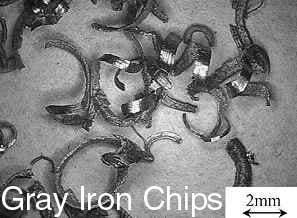
Chipping. I returned from DC and took a factory job in the Spring of 1966. The only job my Dad could find for me at J. I. Case was one I really should have failed at. It was a horrible job, one that most people quit after the first few days. Did they give it to me as some kind of a brutal joke? I don't know. I was a "chipper" on the block line. Tractor engine blocks are cast from gray iron. The castings go through a sequence of coupled machines which mill off the ends, top and bottom of the casting, bore the holes for the cylinders and drill and tap oil distribution passages, the camshaft and main bearing seats and everything else you see machined on an engine block. A
 painted casting goes in one end of the line and a brand-new engine
block comes out the other end minus quite a few pounds of iron chips
and shavings. In 1966 most of these chips ended up on the
floor, some by short conveyor but most just by falling off the
machines. A chipper collected all this oily scrap with a shovel
and a broom and put it in large steel boxes to be returned to the
foundry and used over again. It's sort of like shoveling sand,
except it's iron. And man, is it work. 7:00 am to
3:30. I didn't catch on at first that you were not supposed to
really exert yourself or you would make the job look too easy. I
was reminded not to "kill the job" until I caught on.
I was young and became pretty strong quickly enough. I certainly
was not going to fail at another job. I did the job for four
months until I managed to break my ankle with a powered skid
mover in an overcrowded
aisle. A Workmen's Compensation case, as they called it
then. With the cooperation of a sympathetic orthopedic surgeon I
managed to collect benefits until the start of the fall school
semester, maybe a few weeks longer than absolutely necessary. My
first and last adventure (so far) in collecting money from the
government.
painted casting goes in one end of the line and a brand-new engine
block comes out the other end minus quite a few pounds of iron chips
and shavings. In 1966 most of these chips ended up on the
floor, some by short conveyor but most just by falling off the
machines. A chipper collected all this oily scrap with a shovel
and a broom and put it in large steel boxes to be returned to the
foundry and used over again. It's sort of like shoveling sand,
except it's iron. And man, is it work. 7:00 am to
3:30. I didn't catch on at first that you were not supposed to
really exert yourself or you would make the job look too easy. I
was reminded not to "kill the job" until I caught on.
I was young and became pretty strong quickly enough. I certainly
was not going to fail at another job. I did the job for four
months until I managed to break my ankle with a powered skid
mover in an overcrowded
aisle. A Workmen's Compensation case, as they called it
then. With the cooperation of a sympathetic orthopedic surgeon I
managed to collect benefits until the start of the fall school
semester, maybe a few weeks longer than absolutely necessary. My
first and last adventure (so far) in collecting money from the
government.
-
Terror vs. structure. My dad told me later that my career as a chipper lasted far longer than anyone's before or after. That might have been my first inkling that I wasn't lazy, but that I did better at jobs with physical structure. I learned to organize time and motivate myself in an unstructured environment much later. I was a successful salesman working out of my house for a distant company for a number of years. But structure is easier. I had to work up a healthy terror of not making the mortgage and avoiding the ire of my superiors to keep moving forward every single day for most of my career. Fixing boats has it's own internal structure. The job presents you with what's next and you keep doing stuff until it's all done. I've been able to let the terror demon take bit of a vacation and my blood pressure has dropped. But those mornings when I have trouble getting focused I sometimes wish Mr. Terror were on a shorter leash, or that I could just prioritize and execute without effort. ADD, depression, whatever the reason; it's the time when nothing external is driving me these days that is the most difficult in which to stay productive.
-
Back to school. I go back to school in September 1966 closer to home and move in with Rye, who is doing a year toward a BFA after completing a degree in math. Coming off a major early career failure with CPS, I majored, if it can be called that, in history. Appeared to be the least pernicious thing I could study. It was interesting. I did some good work, but not nearly enough of it. I got increasingly depressed and just stopped one day, just stopped going to that very last class. Actually, I didn't get nearly enough credits. I checked recently.
-
The terror that dominated my later college life was Vietnam. I came within a hair's breadth of being drafted after I dropped out of school in the early 1960s. I would have gone to Canada and this story would be very different. My parents supported that decision. If you lived through those terrible years, whether you fought or not, you understand the craziness. If you didn't, go look up Paul Auster's Op-Ed piece in the New York Times, April 23, 2008 or a thousand pieces very much like it. I respect everyone who lived in that shadow. The eight million Americans who fought, particularly the sixty thousand who never returned, paid a higher price during those years than I did. But none of us got through it unscarred.
-
Too crazy to fight. After several terrible years of uncertainty, an army doctor finally concluded I was too crazy to be drafted. I had problems with depression even then. Stress aggravates it. I thought I knew enough about myself to be certain I would never return from Vietnam alive. I'm not good at keeping my head down, at blending into the scenery, at respecting authority. I'm a leader, I get out in front. When something comes loose in heavy weather on a sailboat these days, I'm usually the first one to move in that direction. It's always been that way. So, would it have been the depression that got me or the inability to play it safe? Neither strikes me as a particularly good personality trait for surviving war. I've just about worn out my PFD. I haven't gone over the side yet, but it's right up there in my risk profile. So I always wear it. I don't care what anyone thinks any more.
-
The anechoic room. I was fascinated with the idea of quadraphonic audio in the mid sixties and built my own sound system and anechoic listening room. I wanted to reproduce and manipulate audio environments, sort of virtual reality in the dark. I took and processed a lot of photographs. I nearly electrocuted myself on a 400 volt amplifier power supply. At 22 I made myself a promise to never build anything with vacuum tubes again. I made the transition to solid state. I got almost enough credits to graduate, but strewn across way too many fields, or so I think. I work part-time fixing old television sets. I get married. Finally, I just drop out and decide to look for a job.
-
School ends with a whimper. What to do? Rye had been a radio station engineer for a couple of years. That looks like something I can do. I hit the study guide for a couple of days and get my second class commercial radio license, followed quickly by the first. I get hired as a transmitter engineer at a 10 kW AM / 50 kW FM station. All vacuum tubes. As a transmitter engineer, all I have to do is take readings and make adjustments every half hour. It's my responsibility to study the schematics for all the equipment and to do whatever preventive maintenance there is. When the transmitter breaks, I must move very fast to fix it. "Dead air" is a bad thing. I build a lot of audio stuff there the rest of the time. I also work part time as an engineer at a local TV station. In a year or so I am chief engineer of the radio station and wire up new studios. I upgrade the old tube console with op-amps. I'm on call 7 days a week and become adept at talking the on-air personalities through patch panel problems or mis-set switches.
-
 The JSK computer.
One day Rye comes home with several cardboard boxes of big PC boards
and a card cage. It's what is left of an abortive attempt by his
company to design a small computer, they intended to make a
"smart terminal" but it wasn't reliable. This is way
before microprocessors. Its all 7400 series TTL. The
processor board is 11 by 15 inches. We have schematics of the
boards, that's all. We work on it together for six months or
so. We build a control panel with 16 bit address and 16 bit data
switches and lots of LEDs. I build a RAM board as the original
machine only had ROM. I figure out the instruction set by
carefully going over the schematics and labeling every gate, flip-flop
and decoder.
The JSK computer.
One day Rye comes home with several cardboard boxes of big PC boards
and a card cage. It's what is left of an abortive attempt by his
company to design a small computer, they intended to make a
"smart terminal" but it wasn't reliable. This is way
before microprocessors. Its all 7400 series TTL. The
processor board is 11 by 15 inches. We have schematics of the
boards, that's all. We work on it together for six months or
so. We build a control panel with 16 bit address and 16 bit data
switches and lots of LEDs. I build a RAM board as the original
machine only had ROM. I figure out the instruction set by
carefully going over the schematics and labeling every gate, flip-flop
and decoder.
-
I teach myself to program in its machine language. At first I have to cycle the program in with the switches, one instruction at a time. Rye has some 5 level Baudot code Teletype equipment from his ham radio days. He builds a serial-to-parallel converter and we get the machine talking to the teletype. Now its programming and more interfaces and peripherals and he pretty much drops out of the project. I work on the computer almost every night and weekend during the 1970s. Over several years I wrote a very basic operating system, all in machine code. I write loader and printer routines for the teletype. Then I can print out the machine code to debug it. I interface a paper tape punch and reader so I can save and reload programs. I put the bootstrap code in EPROMs. I build interfaces to dim lights and control audio. The computer eventually takes up an entire relay rack. I figure out how to write address-independent subroutines. The code runs over three thousand lines of 16 bit instructions, all in hexadecimal machine code. I programmed the JSK to act like a terminal and interfaced it with a 300 baud phone company modem. I hooked up over the telephone lines to a mainframe and taught myself BASIC. I disassembled the JSK for the last time around 1980. By then it could save and reload its program on audio tape. In the end, the JSK computer did two very important things for me: it taught me IC logic and it taught me how to program. Like some guys in the early seventies, we built real computers at home. Then came microprocessors, Jobs and Wozniak, Gates et.al.
-
JSK Code. The printout along the left is a small part of the JSK computer program printout from 9/27/1980. The first three characters are the address. After the colon, which is inserted by the printing program so the code is easier to read, the last four characters are the instruction stored at this address. I wrote the program on quadrangle paper, 25 lines to a page. Each line is the memory address, the instruction and a comment on what the instruction was doing. The memory is three and one-half banks of 16 each 2102 static RAM chips battery backed. The instructions are 16 bits, the address 8 bits. Printouts like this along the left edge of 8 inch wide teletype paper. I got a case of 4 part NCR paper somewhere so by this time I suspect the printouts were in 4 parts, but the paper here looks like ordinary plain teletype paper. The roll is maybe 20-40 feet long with the whole program. I tear it up into sections or just scroll back and forth. I make comments on the printout as a guide to what needs to be revised or written next. When entering code, once you specify the starting point the loader advances one instruction at every carriage return. That way all you have to type is the 4 alpha / numeric characters for the 16 bits of the instruction. Patching is easy as you can step along and watch the program go by and stop and change the instruction whenever you want. Since the code does not relocate dynamically (no assembler here) if your correction is longer than the original, you jump out somewhere and write the segment and then jump back into sequence. There is a separate RAM, sort of. As I recall there are 256 registers that can be read or written to by an instruction. I dedicated some of them to certain functions, like input or output bits at a port. That way the subroutines that act on the data always find it in the same place and can pass data back and forth. Not exactly the general purpose microprocessor of today, but powerful enough to pass as a computer with a CRT screen and reading and writing through 5 bit Baudot or magnetic tape. The teletype printer also has a keyboard, so that is the main program entry device.
-
The computer has an LED and toggle switch front panel, which was the only way to talk to it before the teletype hardware was built and the code written. You can set the address and instruction with the 28 toggle switches and then press the "write" button to stick it into ram. There never was more than an LED readout until relatively late when I got the display board working. This is a display that is maybe 40 characters wide and sixteen lines long on a green video monitor. Green was a good color when you had only light and dark. Or maybe it used a TV set. It sort of runs together. I used it to monitor some things but it arrived pretty late in the day. The teletype already talks to me and on hard copy to boot. You learn to head hex off LEDs just like there was a hex display there. This is all done at the most fundamental machine language. When you rotate a word, you also remember the shift registers that pull it off. I got pretty close to the hardware as we weren't sure what it all did.
-
With a focus on the hardware, when you think of writing a number somewhere you see it (pretty blurry though) as what the hardware is doing. It's a synchronous clocked system and every cycle is divided in half, so you can do operations requiring an intermediate step. Memory speed is very underutilized. All the memory thinks about is how to get you the contents that correspond to the address you gave it. Then in the second half of the cycle something can be written into memory too. Instruction memory functions like ROM because that was how the original product was like. So you write in memory to change the program, but the numbers in play during computation are in the memory registers. I have been realizing how bumbling computers were then and how powerful. We had machines that could be programmed, and the whole concept was exciting. This was particularly true as most of the hardware interfaces for the computer were things like light dimmers and sound variable attenuators. Then I realized that this writing is like describing how to skin a squirrel. I had to be there making it happen so I know how to tell the story today. But to today's computer literati, this is the only glimpse you are going to get into that time. From me, anyway.
-
As kids we recapitulated the tech experiences of the 1930's -- crystal sets. A simple detector with no amplification whatever. You listen on headphones that don't take a lot to drive. But few of you outside of museums are going to work with hardware like this. Primitive by today's standards, it was a general purpose programmable computer -- the real deal. That alone was worth all the work you put into it. And, working with it gave you a pretty detailed understanding of the hardware. Once I got past the JSK, I could pass for an electrical engineer. Quite a ways, actually, considering what most engineers do every day. I never pretended, though. I always made sure it was understood that I was self-taught, not a degreed engineer. Later I would manage engineers, which is all about getting them to tell you what is actually happening. You ask probing questions at design reviews. Whenever you hit a soft spot, it sticks right out in what the person is saying. So you probe around and ask for explanations of stuff. If it's good, terrific. If it needs to go back, it does. As a manager you can borrow expertise from anywhere. You don't need to know a lot about a project you manage. You need to know it is technically solid and all the relevant factors were considered. You need to remember the history of the project, which is probably more comprehensive than almost everyone else in the room. That gives you all you need, along with a crew of other engineers who ask questions too. It's not that tough.